
The Long-Awaited Recognition: President Marcos Praised by the World, with Over 50 Countries Supporting Him as a Global Leader
From Archipelago to Arena: PBBM’s Bid for a Larger World Role
In the quiet corridors of Malacañang, a strategic ambition is taking clearer shape. President Ferdinand R. Marcos Jr.—PBBM to most Filipinos—has stepped into a wider diplomatic spotlight, and with it comes a question that would have seemed audacious only a few years ago: Can the Philippines graduate from regional stakeholder to global decision-shaper?
Supporters argue the momentum is real. They point to an expanding circle of diplomatic partners and to public statements from foreign missions that, taken together, suggest broad encouragement for Manila’s current course. At the center of that effort sits a concrete objective: winning a non-permanent seat on the United Nations Security Council (UNSC) for 2027–2028. For a country long cast as a modest voice in Southeast Asia, the aspiration signals a recalibrated sense of possibility.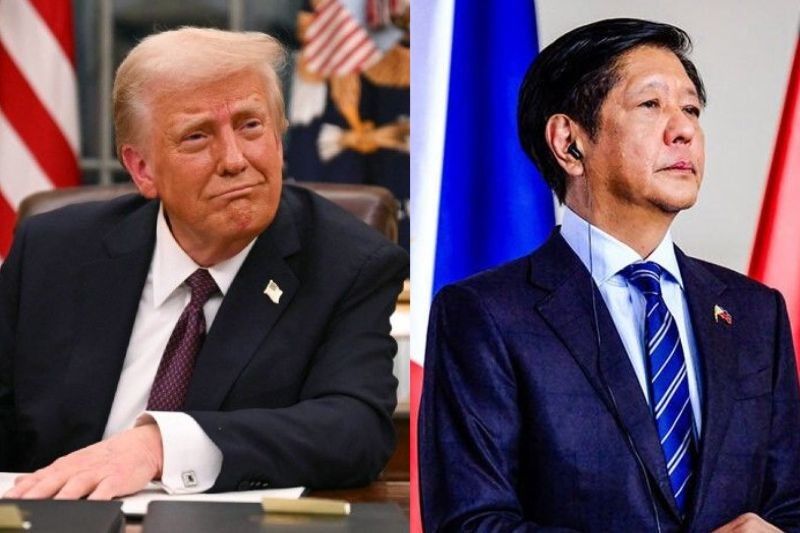
The UNSC’s architecture remains famously rigid, with five permanent members and ten rotating seats that give the rest of the world a temporary say on questions of war, peace, and international security. For the Philippines, a successful bid would represent more than symbolic prestige. It would place Filipino diplomats at the table where mandates for peace operations, sanctions regimes, and conflict-prevention frameworks are negotiated in real time. That shift carries obligations—discipline, continuity, and the willingness to cast difficult votes—but it also amplifies the country’s ability to advocate for maritime law, climate security, and the protection of civilians, areas where Manila has argued it brings lived experience and operational credibility.
Proponents locate the bid within a longer arc of service. For decades, Filipino contingents have deployed to UN missions from Africa to the Middle East, earning a reputation for professionalism in dangerous theaters. That record, they contend, grounds the UNSC campaign in more than rhetoric; it anchors it in practice. At the same time, the administration has promoted a posture it describes as “independent and modern”—widening partnerships with traditional allies while cultivating new ties across Asia, the Gulf, and Europe. The stated goal is not confrontation but capacity: digital modernization, renewable energy, resilient infrastructure, and a rules-based order at sea.
If the foreign-policy vocabulary sounds familiar—cooperation, deterrence, diversification—the tone has shifted. Manila’s outreach has been less about outsourcing security and more about staking claims to agency. In regional forums, the Philippines has sharpened its advocacy for lawful conduct in contested waters. In economic dialogues, it has framed digital governance and climate adaptation as twin engines of inclusive growth. Each move, however incremental, signals that the country seeks to be read not as a passive venue for great-power rivalry but as a mid-sized state with a coherent agenda.
The UNSC campaign is, of course, also a political narrative. At home, it dovetails with the administration’s promise of “unity,” translating domestic consolidation into international standing. Abroad, it gives partners a clear test of Manila’s diplomatic weight: Can it assemble a voting coalition, sustain a disciplined message, and demonstrate that it will be a constructive, principled voice in the Council’s cramped deliberations? Success would require not only endorsements but also credibility—transparent priorities, a strong mission in New York, and a willingness to spend political capital on issues that matter to Filipinos and to the wider developing world.
Skeptics will ask hard questions, as they should. What specific resolutions would Manila champion? How will it navigate pressures from major powers without sacrificing core interests? Can it translate its maritime law advocacy into concrete, coalition-backed outcomes—on freedom of navigation, on the safety of seafarers, on environmental protection in shared seas? Will its record on human rights and governance bolster, rather than complicate, its case before UN delegations who calibrate votes with long memories?
Those questions do not negate ambition; they refine it. A credible UNSC run demands a disciplined campaign plan: sustained capital-to-capital outreach, technical depth in New York, and policy proposals that speak to the anxieties of our era—food security, climate-driven displacement, cyber stability, and the cascading risks of great-power competition. It also asks for humility: membership is not a coronation but a test, and rotating states succeed when they do the unglamorous work of drafting texts, brokering compromises, and building trust across blocs that rarely agree on first principles.
Yet there is a deeper reason the moment resonates. For a nation too often reduced to familiar storylines—migration, typhoons, political theater—the idea of the Philippines as rule-maker rather than rule-taker carries psychological weight. It affirms that geography need not be destiny; that an archipelago can be a bridge between regions and norms; that a mid-sized country can matter because it shows up prepared, persuades with facts, and insists that even in an unruly world the law still speaks.
Whether the campaign succeeds will depend on craft as much as charisma. The next steps are concrete: secure endorsements, outline priority dossiers, staff missions with seasoned negotiators, and demonstrate—in deeds rather than slogans—that Manila can add value where the Council most often stalls. If that work is done well, a seat in 2027 would not merely validate an administration. It would confirm that a country long underestimated can contribute meaningfully to global security at a time when credible voices are scarce.
“Even the smallest can become mighty at the right time,” one analyst observed. That is less prophecy than prescription. The Philippines’ rise, if it comes, will not rest on applause lines or photo-ops, but on sustained competence, coalition-building, and a willingness to carry hard files in hard rooms. The applause fades. The work endures. And in that work lies the chance to turn recognition into responsibility—and ambition into standing that lasts.