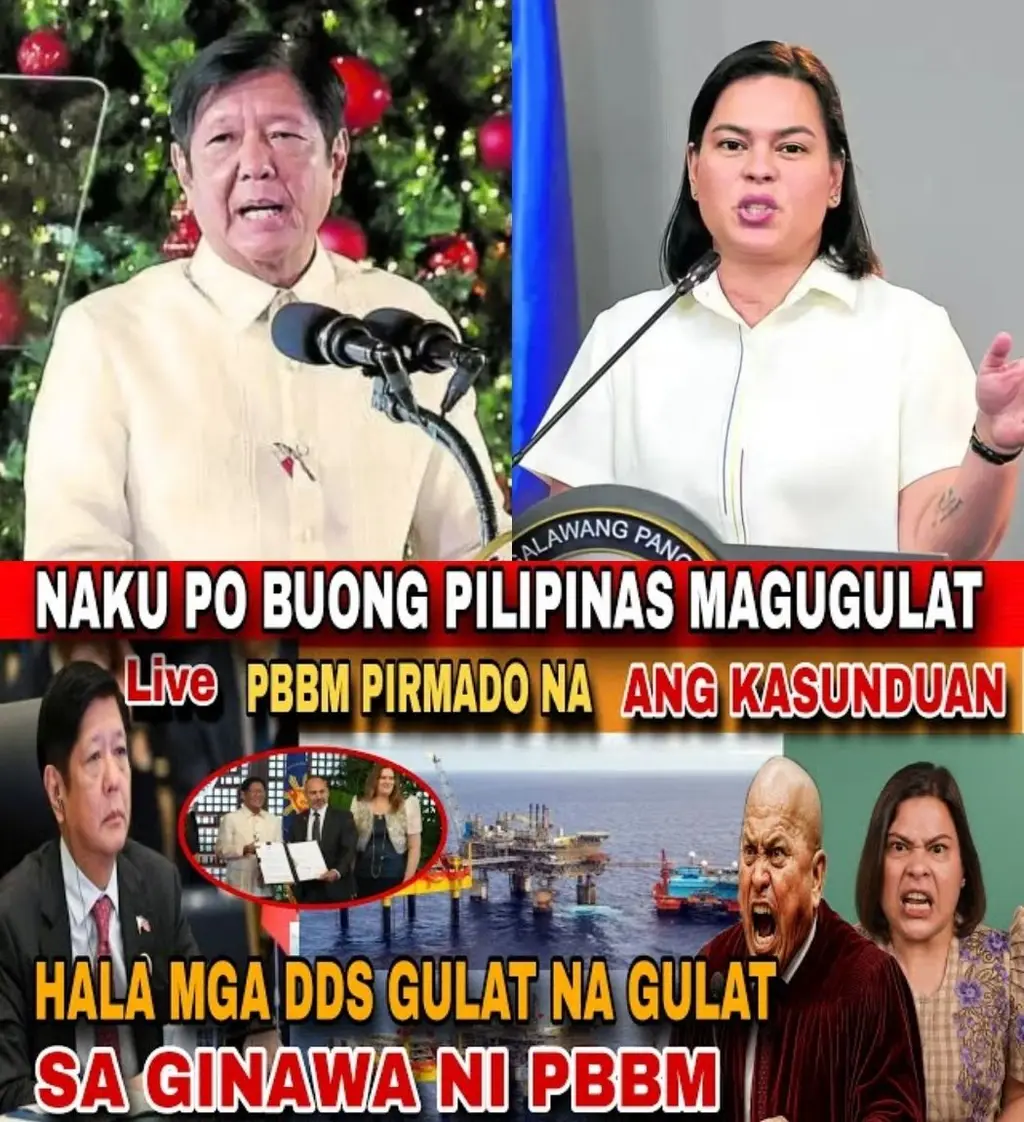
NAGLALAGABLAG NA BALITA! MATINDI! Matapos ang Linggong Tahimik sa Malacañang, Biglang Sumabog ang Ulat ng Pinirmahang Kasunduan ni PBBM na Magbabago sa Hinaharap ng Bansa! Isang Secret Deal na Pumukaw ng Pagkagulat Maging sa mga Malalapit sa Dating Administrasyon — Ano ang Laman ng Kasunduang Ito na Tinututukan Ngayon ng Buong Bansa? Mga Clauses na Hindi Inaasahan, at mga Mahahalagang Pulong na Pinatawag ng mga Opisyal! Supporters ni Duterte, Naguguluhan at Nagsisigawan sa Social Media. Ano ang Totoong Kapalit ng Kasunduang Ito, at Bakit Naging Isang Malaking Isyu sa Senado? Alamin ang Lahat ng Detalye ng Desisyong Ito na Yumanig sa Buong Pilipinas!
The Agreement That Shook the Nation: The Secret Behind PBBM’s Signature
In the quiet halls of Malacañang this past week, a document signed by President Ferdinand “Bongbong” Marcos Jr. suddenly became the epicenter of a national uproar. The agreement, reportedly valued at $207 million, concerns energy exploration in the Philippines’ territorial waters. But what’s more shocking, according to insiders, is not the amount involved or the project itself, but the people behind it and the hidden provisions buried within the pages of this mysterious deal.

The Sudden Signature
According to a source who requested anonymity, the signing of the agreement came as a complete surprise. “It happened with no media coverage, no press release, and no public notice,” said the insider. In a late-night closed-door meeting, President Marcos Jr. signed the document alongside three foreign consultants, two cabinet members, and a mysterious representative from a private company with a controversial track record in the region.
“No one knew the president was going to sign such a monumental agreement,” said an official from the Department of Energy. The following day, a photo of the signed document quickly surfaced online, sending shockwaves through the political scene. But what caught the attention of analysts was the sealed clause known as “Section 17-B: Exclusive Operating Rights.” What did this mean? And why was it kept so tightly under wraps?
The Loyalist Response
Social media erupted almost instantly. Proponents of former President Rodrigo Duterte, known as the DDS (Duterte Die-Hards), expressed their shock and anger at the news. In a viral post, a former Duterte administration official wrote:
“If this is true, it’s as if we’re selling the country’s interests again. This isn’t an agreement; it’s a betrayal of the people.”
Senator Ronald “Bato” Dela Rosa also weighed in during an interview, revealing his shock. “If it’s true that PBBM signed this without consulting the Senate, he must be called in for an explanation,” he demanded, his tone clearly one of anger.
The Silence of Malacañang
As the issue spiraled out of control, the Palace remained eerily silent. No official statement had been released, but rumors circulated that this silence was intentional—an attempt at a “cooling period” while preparing a more detailed explanation for the public.
However, some cabinet members seemed uneasy. According to a leaked email thread obtained by the Philippine Investigative Bureau (PIB), there were exchanges between two high-ranking officials:
Official A: “I don’t know why they rushed to sign it at night. It seems like they’re hiding something.”
Official B: “It’s an order from the top. We can’t do anything about it. Just follow protocol.”
These lines, while not confirmed, were enough to fuel suspicions among the public that there were “invisible hands” pushing the deal forward.
The Mysterious Company
The company reportedly granted the rights to this project is Blue Horizon Energy Corporation—a firm registered in Singapore with shell subsidiaries in the British Virgin Islands. According to some reports, the company had previously been investigated for tax evasion and bribery scandals in other countries.
A former consultant for the company sent a message to a journalist, claiming:
“They can’t deny it. Some government officials themselves pushed to fast-track the process in exchange for ‘confidential commitments.’”
While this statement has yet to be verified, it further fueled the growing theories and turned the discussion to the motives behind the agreement.
The Senate’s Objection
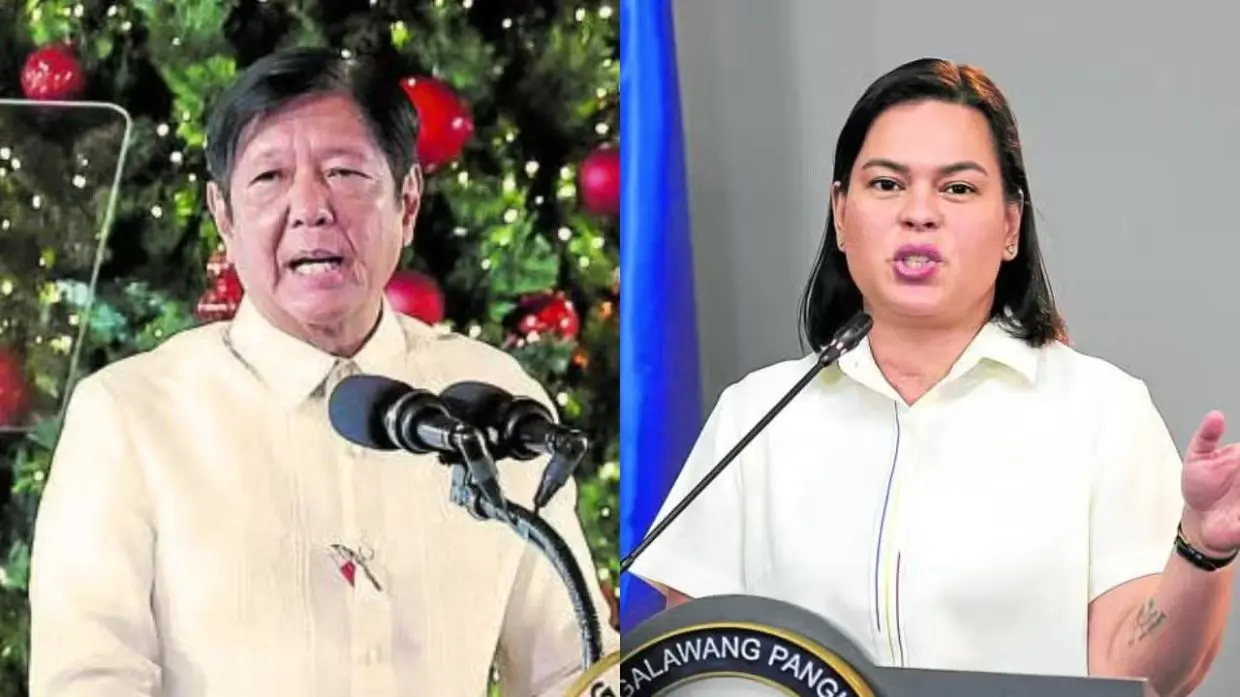
The Senate did not stay quiet for long. In an emergency session, several senators— including Risa Hontiveros, Francis Escudero, and Imee Marcos—questioned why the agreement had been rushed through. Senator Escudero remarked:
“We’re not the enemies of the Palace, but there needs to be transparency. Why was it signed at night? Why was there no public bidding?”
During the session, a confidential memo from a government agency, marked “Eyes Only,” surfaced. The memo reportedly outlined a possible profit-sharing scheme between Blue Horizon and two unnamed officials.
The Explosion of Documents
Three days later, a whistleblower, a former IT specialist from the Department of Energy, came forward. In his sworn affidavit, he admitted that a “hidden annex” had been excluded from the official contract. This annex reportedly contained provisions allowing the foreign company to claim priority over a portion of the profits for the next 20 years.
“We knew it was wrong. They removed the annex before sending it to the Commission on Audit. But I have a backup,” the whistleblower said.
This revelation quickly made headlines:
“ANNEX OF AGREEMENT EXPOSED! ENERGY DEAL COULD BE VOID!”
PBBM’s Response
The following day, President Marcos Jr. issued a brief statement:
“This agreement is for the benefit of the Filipino people. My administration is not hiding anything. All details will be released in due time.”
However, instead of calming the public’s suspicions, his words only amplified the discussion. Many netizens began to question: if there’s nothing to hide, why the need for a “proper time” to release the details?
The Divided Nation
As the issue continued to unfold, the public’s opinions became sharply divided. Supporters of the President believed it was a strategic move for the country’s energy and economic future, while critics saw it as “another example of cronyism and secret negotiations.”
Protests began in provinces, with rallyists holding placards that read:
“SHOW US THE TRUTH!”
“ENERGY OR DECEPTION?”
The Media’s Role
While traditional media tread carefully between truth and misinformation, an independent investigative channel on YouTube claimed to possess an “audio recording” from the very meeting at Malacañang. Though unverified, a 2-minute leak preview featured a voice, allegedly that of the President, saying:
“We proceed quietly. We don’t need another noise.”
Though the source was unclear, this snippet was enough to make the hashtag #QuietDeal trend, reaching millions of views in just one night.
Sara Duterte’s Role
Vice President Sara Duterte was not immune to the controversy. An insider revealed that she was “not informed” about the agreement and was “deeply disappointed.” According to the source:
“She called PBBM and said there needed to be transparency. She was reportedly furious.”
A viral video showed VP Sara evading media questions about the issue, offering only a simple reply:
“There are things that need to be discussed internally, not in public.”
The Secret Meeting
In a secret Senate meeting, several senators suggested a full inquiry and requested a copy of the original document. But according to witnesses, there was clear division within the Senate itself—pro-Malacañang and pro-transparency factions clashed. Shouting, walkouts, and off-camera exchanges unfolded.
One staffer recounted:
“I heard one senator shout, ‘Don’t make us blind to what’s happening in our own country!’”
The Final Twist: The Mysterious USB
Days after the chaos, a mysterious courier delivered a box to a journalist’s office. Inside was a USB drive labeled “PROJECT LUCENT.” According to those who viewed it, it contained raw minutes from the Malacañang meeting and scanned copies of the annex removed from the official contract.
If proven true, this could be the “missing piece” of the puzzle—the document that could confirm whether the agreement is legitimate or riddled with secrets.
Epilogue
The issue remains heated, with citizens eagerly awaiting every statement, every leak, and every whisper from Malacañang. No one can say for certain who is telling the truth, but one thing is clear: this agreement, signed in silence, has shaken the very foundation of the Philippines.
The question now is not just about the contents of the contract—but whose interests it truly serves and who dictated its signature. Until those questions are answered, the nation remains suspended in mid-air—caught between the promise of energy and the shadow of deceit.