Isang Deklarasyon na Yumanig sa Buong Rehiyon — Ano Ang Mga Pagbabago Na Maaaring Maganap sa Hinaharap ng mga Pilipino?
A Declaration That Shook the Region — And Could Change the Future of the Philippines
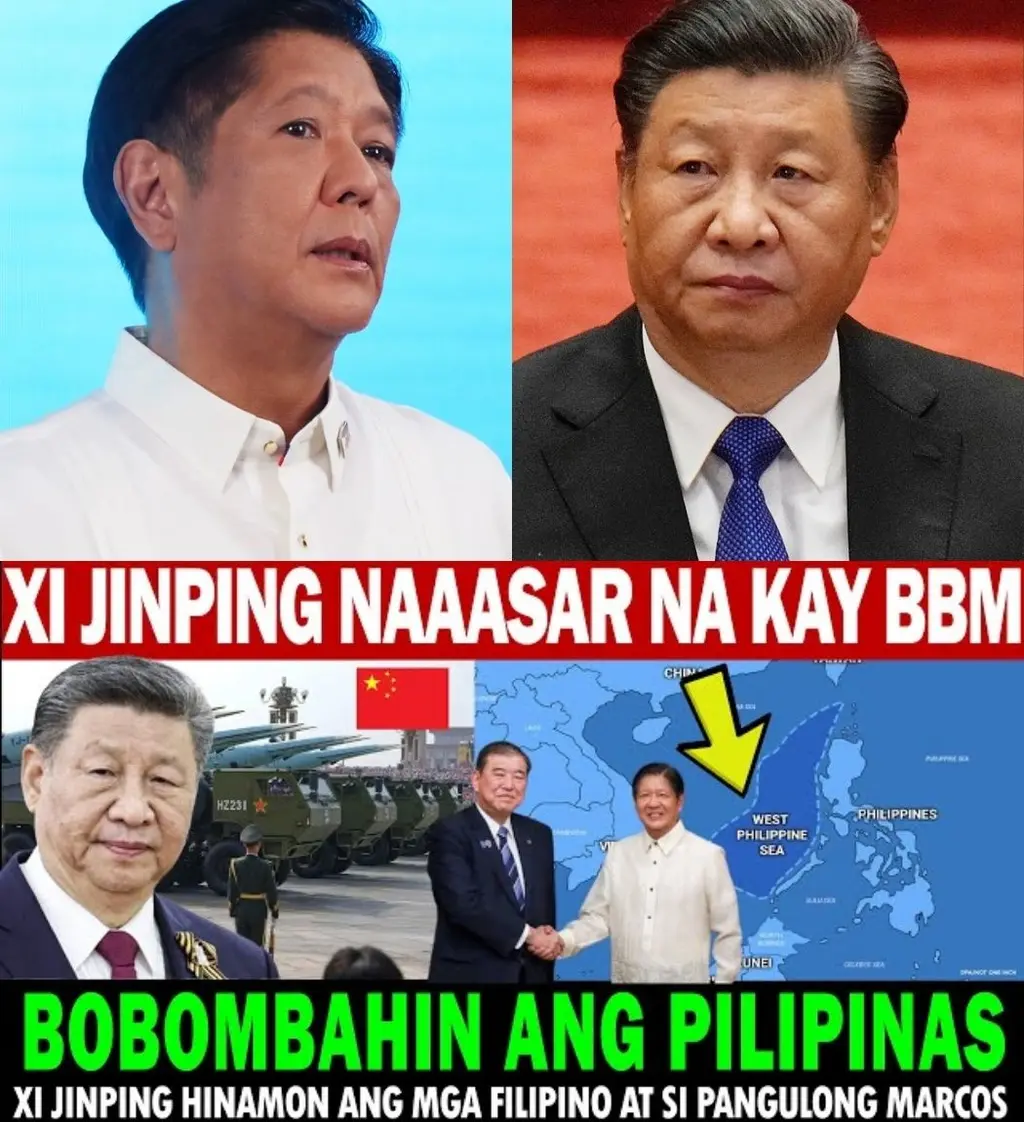
Amidst the turbulent waters where the tides of geopolitics swirl between powerful nations, tension has been rising between Xi Jinping, the President of China, and Ferdinand “Bongbong” Marcos Jr., the President of the Philippines. This is not a traditional declaration of war—this is a war of tactics, maritime strategy, and national sovereignty with far-reaching implications for every Filipino.
1. The Quiet Storm that Threatens the Horizon

It all began on January 4, 2023, when Xi Jinping and Bongbong Marcos Jr. met in Beijing to discuss the future of relations between the Philippines and China. On the surface, the talks were about trade, culture, and cooperation. But beneath the surface, a much deeper conflict was brewing—control of the seas, the South China Sea, and the fate of thousands of Filipino fishermen who rely on these waters.
2. A New Chapter in the Battle
On August 8, 2025, tensions boiled over when China called the Philippines “playing with fire” after Marcos Jr. suggested that the Philippines might be drawn into any potential conflict between China and the United States over Taiwan. Marcos also stated that more than 200,000 Filipinos were in Taiwan, and if necessary, the Philippines would intervene to protect its citizens. Beijing, in turn, warned not to “disturb their core interests.”
3. The Battle at Sea
But it wasn’t just words that fueled the fire—actual incidents at sea have escalated the tension. For example, a Chinese warship collided with its own coast guard vessel while chasing a Filipino fishing boat near Scarborough Shoal. The scene involved Filipino fishermen, a Philippine patrol boat, and two Chinese vessels maneuvering through the waves in what became a dangerous dance of lasers, water cannons, and collisions. All of this was part of a complex geopolitical theater.
4. The Impact on Small Towns and Ordinary Filipinos
For the average Filipino—the fishermen in Batangas, the families in the Visayas who depend on clean seas, the police rangers in the West Philippine Sea—this war is not abstract. It is:
A threat to fishing rights: Many Filipino fishermen are being harassed by Chinese coast guards and maritime militias in waters claimed by the Philippines.
A danger to lives and livelihoods: Every boat that is pushed away, every radar beam that hits a ship, every whistleblower who exposes footage—fear is growing.
Geopolitical entanglement: This is not just a Philippines-China issue—it involves alliances, the Philippines’ relationship with the United States, and the security of the entire region.
5. The Hidden Game of Diplomacy
Xi Jinping is not just leading China militarily and economically—he is also influencing the diplomatic playing field. The discussions between Marcos and Xi about mechanisms to reduce tension in the West Philippine Sea are an example of this. However, at times, diplomacy seems like a cover for a deeper goal: controlling the seas and expanding influence over disputed territories.
6. Why Is This Called “War”?
Although there has been no formal declaration of war between the Philippines and China, aspects of war are clear:
Strategic posturing: The deployment of missile systems, militarization of artificial islands, and filing of protests in international forums.
Grey-zone tactics: Incidents that go beyond normal clashes but do not yet constitute full-scale war—like the use of lasers against Philippine patrol ships at Second Thomas Shoal.
Psychological impact: Spreading videos, using the media to distract or intimidate the opposing side, and keeping the public on high alert for the possibility of a larger confrontation.
7. What Could Happen Next?

It is unclear how this conflict will end. Here are some possible directions:
Diplomatic agreements: The Philippines and China may find a modus vivendi—an arrangement to resolve issues related to fishing, maritime rights, and patrol coordination.
Increased involvement of alliances: The Philippines may see heightened participation from the United States and other countries, making it a focal point for strategic alignment.
Military escalation: A small incident could escalate into a larger confrontation. The risk of armed conflict is real, and the question remains: how can the people avoid becoming victims of decisions made in distant offices and boardrooms?
8. A Call to Action for Filipinos
Amidst all this, the message for every Filipino is clear: be prepared, be vigilant, and don’t let the decisions made on ships and in offices far from our view put us in harm’s way. The situation shows that national security is not just about our military strength—it’s about our ability to channel information, fight for our rights, and advocate for the welfare of our fellow citizens.
The Philippine people must not only focus on the physical protection of our seas but also on the protection of our future through informed, unified action. The geopolitical dynamics of the South China Sea are shifting, and every Filipino must understand their role in this evolving struggle for sovereignty.
9. A Regional Conflict with Global Consequences

What’s happening between China and the Philippines could send ripples across the region. The South China Sea, with its vital shipping lanes and rich natural resources, is at the heart of a growing regional conflict that involves global powers. The involvement of the United States, and potentially other nations in the region, could change the dynamics of the conflict. For now, the Philippines stands at a crucial crossroads—its decisions will affect not only the future of the country but also its place in the larger geopolitical landscape.
As tensions rise, the Philippines must decide whether it will be a passive observer or an active player in this high-stakes geopolitical game. And for the Filipino people, the most pressing question is: will the country’s leaders rise to the challenge and protect their sovereignty, or will they be swept away by the forces at play in the South China Sea? The answer to that question may shape the future of the Philippines for decades to come.